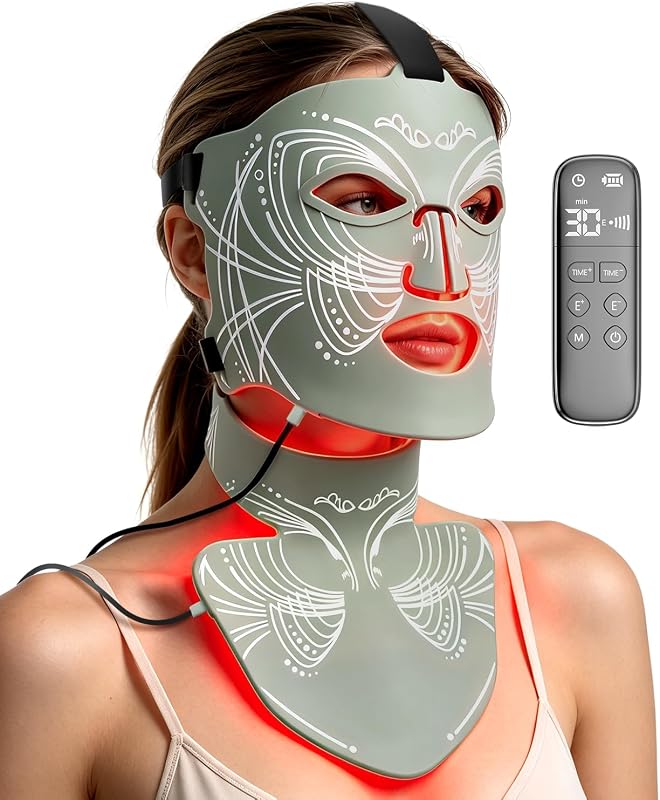
How to Choose LED Face Mask — Complete Buying Guide
Everything you need to know before buying led face mask. Expert advice on what to look for, key features explained and top picks updated weekly.
Search "LED face mask" and you'll find everything from a $19.99 budget option to a $1,099 clinic-grade device, plus, oddly, a handful of $28 gesture-sensing light-up masks marketed as gifts for teenage boys that have nothing to do with skincare at all. This guide is about the actual skincare devices, what the different light colors are supposed to do, and where the real evidence gap sits between the marketing and what you'll actually see in the mirror. You can check current prices across everything mentioned here on our LED face mask price tracker.
Red, blue, and near-infrared: what each one is actually for
The three wavelengths in this category aren't interchangeable, and a mask's LED count matters less than which colors it actually includes. Red light (roughly 630–700nm) is the anti-aging wavelength, aimed at fine lines, tone, and overall skin texture. Blue light (roughly 415–450nm) targets acne-causing bacteria specifically and does very little for wrinkles. Near-infrared sits outside visible light entirely and penetrates deeper than either, often paired with red light for a stronger anti-aging effect. A mask with "7 colors" isn't automatically better than one with three if the three are the right three for what you're actually trying to treat.
The specs that actually matter
| Spec | What to look for | Why it matters |
|---|---|---|
| Wavelengths included | Red for anti-aging, blue for acne, near-infrared for deeper treatment | Matters more than total LED count; check which colors you're actually getting |
| LED count | 100+ for genuinely even full-face coverage | Gaps in coverage, especially around the nose and eye area, are a real recurring complaint |
| FDA clearance | Look for it stated explicitly, not implied | A real, checkable credibility signal in a category full of vague effectiveness claims |
| Eye protection | Confirm eye cut-outs or included goggles | Comfort and safety both depend on this, and it's inconsistently included across price points |
| Rechargeable | USB-C rechargeable over disposable-battery designs | More convenient and cheaper long-term, and now the norm rather than the exception |
What you're actually treating
| Mostly targeting | Prioritise | Don't overspend on |
|---|---|---|
| Fine lines and overall anti-aging | Red light and near-infrared specifically, consistent 3–5x weekly use | A high total LED count if the wavelengths aren't right |
| Acne | Blue light specifically, ideally FDA-cleared for acne treatment | Red-light-only masks, which won't do much for breakouts |
| General glow and routine skincare | Comfort and ease of use, since you'll only see results if you actually use it consistently | Clinic-grade pricing if a simple routine is really all you want |
| Tight budget, want to try the category first | A well-reviewed sub-$50 pick over an unverified premium-sounding one | Extra modes and colors you won't use regularly |
The question everyone actually has: does it work?
This is, by a wide margin, the most common theme running through this category's reviews, more than comfort, more than price. It's not that people report no results at all, plenty do, but skepticism about how much real, visible difference a mask makes runs through even the positive reviews, and several buyers specifically question whether five-star review patterns are genuine. The honest read, consistent across brands and price points: results, where they show up, take weeks of regular use, not days, and they tend to be gradual, brighter tone and smoother texture, rather than dramatic. If you're buying expecting a single dramatic before-and-after, you're setting yourself up to be part of the skeptical half of the reviews. FDA clearance, where a listing has it, is worth checking for specifically, since it's one of the only concrete, checkable signals in a category otherwise full of vague marketing language.
Comfort and fit: the rigid-mask problem
A real, recurring complaint concentrated on rigid, hard-shell mask designs: pressure on the nose bridge, general heaviness, and discomfort during longer sessions. It's not universal, and it doesn't show up on every rigid design, but it's common enough that comfort is worth weighing alongside the light specs themselves, especially since you're only going to get results from a mask you actually wear consistently. Flexible silicone designs generally fare better on this specific complaint, though sometimes at the cost of a slightly less even fit against the face.
Cheaper than the clinic, but slower
The honest value comparison here isn't against a $30 skincare product, it's against repeated professional red light or dermatologist visits, and against that comparison, an at-home mask is genuinely the cheaper option over time. The tradeoff, mentioned often enough to take seriously, is that at-home devices are generally less powerful and slower than in-office treatments, and several reviewers specifically note that inexpensive masks may underperform relative to pricier ones. Treat this as a long-term routine investment measured in weeks and months, not a one-time purchase measured against a single dramatic result.
What we'd actually pick
Best all-rounder
Comfortable, lightweight, genuine eye protection, and consistently praised for ease of use, covering red, blue, and infrared in one device. The safest default if you're not shopping for one specific concern.

Best budget
Under $20 with a real review base behind it, cordless and USB-C rechargeable, with a soft silicone fit and included neck coverage that's rare to see at this price.

Best for acne specifically
FDA-cleared specifically for acne, with blue light as the actual treatment wavelength rather than an add-on. The right pick if breakouts, not fine lines, are your actual concern.

Best for skeptics who want the strongest credibility signal
FDA-cleared, with genuinely short 3-minute daily sessions and an app-guided routine, which addresses the consistency problem directly by making the routine easier to actually stick to.

Mistakes worth avoiding
- Choosing a mask by total LED count alone without checking which actual wavelengths it includes.
- Buying a red-light-only mask expecting it to help with acne, which is a blue-light job.
- Expecting a dramatic, fast result and giving up after a week or two of inconsistent use.
- Ignoring comfort and eye protection in favor of spec-sheet numbers, on a device you need to wear regularly for it to do anything.
- Mistaking a $28 gesture-sensing light-up mask in the search results for an actual skincare device.
So, which one
No specific concern beyond general upkeep: a comfortable all-rounder with red, blue, and infrared covered, over the cheapest option on the page. Tight budget or just curious about the category: a well-reviewed sub-$20 pick rather than an unverified premium-sounding one. Acne is the actual target: blue light specifically, ideally FDA-cleared for that use. Still not sure it's worth it: the FDA-cleared, quick-session option, since a routine you'll actually stick to is what separates a real result from a drawer full of good intentions. Whatever you land on, give it weeks of consistent use before deciding it isn't working.
Top Picks