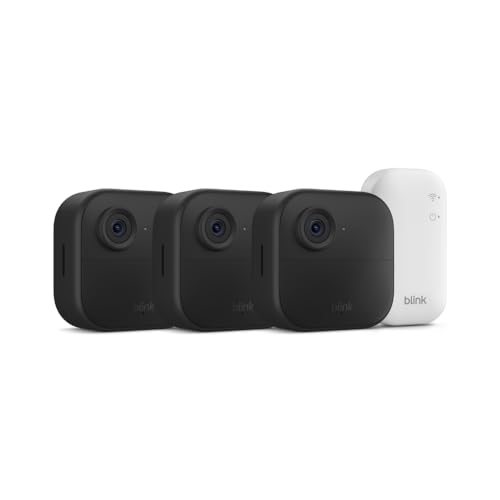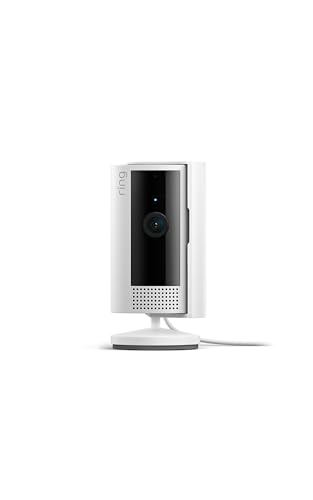
How to Choose Home Cameras — Complete Buying Guide
Search "home camera" and you'll land anywhere from a $17 indoor Wi-Fi camera to a $1,600 16-channel NVR kit with a 4TB hard drive built for a small business, not a house. Almost nobody shopping for a single doorbell or a camera over the back door needs to think about the second thing. This guide is about the actual decision most people are making, with an honest look at when the bigger system genuinely makes sense too.
Jump to:
- One camera or a whole system: two different purchases
- The specs that actually matter
- What you're actually covering
- The subscription question, and why it matters more than the spec sheet
- False alerts, and why they're not a defect
- Connectivity, support, and the smaller complaints
- A quick word on where you point it
- What we'd actually pick
- Mistakes worth avoiding
- So, which one
One camera or a whole system: two different purchases
Three genuinely different things share this search term. A single smart camera, wired or battery, covers one spot: a front door, a backyard, a nursery. A video doorbell is really its own specific version of the same idea, built around the entryway specifically. And a multi-channel NVR kit, the $700-plus systems with 8 or 16 channels and a multi-terabyte hard drive, is a small-scale professional security install, the kind of thing that makes sense for a larger property or a business, not an apartment or a typical house. None of the three is the "wrong" purchase, but comparing their prices against each other is comparing a doorbell to a security contractor's toolkit. Know which one you're actually shopping for.
The specs that actually matter
| Spec | What to look for | Why it matters |
|---|---|---|
| Resolution | 1080p for basic monitoring; 2K/4K if you need to identify faces or plates after the fact | Higher resolution mostly matters for zooming into footage later, less for the live view |
| Power source | Battery for flexible placement, wired for continuous uptime, solar to offset battery charging outdoors | Battery cameras need periodic recharging or good sun exposure; wired ones need power nearby but never die mid-event |
| Night vision | Confirm it's actually listed, and whether it's colour or infrared | A camera without real night vision is close to useless for its main outdoor security purpose after dark |
| Storage / subscription | Local SD card or local hub storage, or an explicit "no subscription" claim, if you want to avoid ongoing costs | This is the single biggest hidden cost in this category, covered in full below |
| Detection type | AI person/vehicle detection specifically, not just generic "motion detection" | Generic motion detection is what triggers on passing cars and blowing leaves; person detection cuts down on that noticeably |
What you're actually covering
| Mostly covering this | Prioritise | Don't overspend on |
|---|---|---|
| Front door / packages | A dedicated doorbell design, wide-angle "head-to-toe" view, chime compatibility if you have one | Resolution beyond 2K, which rarely matters at typical doorbell distance |
| Indoor / pet / baby monitoring | Two-way audio, pan-tilt coverage, local storage for privacy-sensitive footage | Outdoor-rated weatherproofing you don't need indoors |
| Backyard / outdoor perimeter | A genuine IP65+ weatherproof rating, solid night vision, solar if running power outside is inconvenient | Extra channels or NVR-scale storage for a single outdoor spot |
| Whole property / multiple entry points | A proper multi-channel PoE system with local HDD storage, sized to how many entry points you actually have | Buying several standalone single cameras separately, which gets more expensive and harder to manage than one system |
The subscription question, and why it matters more than the spec sheet
This is the single most common thing that comes up across the full range of products in this category, well ahead of any complaint about the camera hardware itself: many systems, including some of the biggest and most recognizable names in the space, sell the camera itself outright but then gate the features that actually make it useful, recorded video history, AI person detection, extended clip storage, behind a required monthly subscription. It's not a scam or false advertising exactly, it's a real and disclosed business model, but it's easy to miss at the point of purchase if you're comparing sticker prices alone.
The honest alternative exists and is genuinely common, not a workaround for the technically minded: cameras with local SD card or local hub storage, explicitly marketed as "no subscription" or "no monthly fee," are a real, mainstream category now, not a fringe option. They trade the convenience of cloud access from anywhere for a one-time cost and full control over your own footage. Which one is right for you depends entirely on whether remote cloud access matters more to you than avoiding an ongoing bill, there's no universally correct answer, but you should be choosing it on purpose rather than discovering it after the first month's charge.
False alerts, and why they're not a defect
Motion-triggered false alerts, a notification for a passing car, a shifting shadow, a moth near the lens at night, show up as a complaint across brands and price points fairly evenly. It's less a manufacturing flaw and more an inherent limit of basic motion detection, which is exactly why AI person/vehicle detection (mentioned in the specs above) exists as an upgrade over it. Expect to spend some time in the app tuning sensitivity and detection zones after setup on almost any camera; a small amount of that is normal, not a sign you bought the wrong one.
Connectivity, support, and the smaller complaints
A handful of smaller, less dominant complaints round out the picture: occasional Wi-Fi connectivity drops, particularly in weak-signal outdoor spots, slower or less helpful customer support on some of the newer or lesser-known brands, and the usual app-reliability grumbles that show up in almost any connected-device category. None of these rise to the level of the subscription issue above, but they're worth a quick check in recent reviews for the specific model, especially if you're buying from a brand you haven't heard of before.
A quick word on where you point it
Worth saying plainly since it's easy to overlook in the excitement of a new camera: outdoor and doorbell cameras that capture a neighbor's property, a shared walkway, or audio beyond your own boundary can run into real legal and neighborly issues depending on where you live. Angling a camera to cover your own entry point and property line, rather than sweeping across someone else's yard or window, avoids most of this before it becomes a problem.
What we'd actually pick
Best-known doorbell (with a subscription caveat)
The name most people already recognize, and for good reason: reliable motion alerts, solid two-way talk, and a wired design that never needs charging. The honest caveat, echoed across every review source we found, is that the full feature set needs a subscription. Go in knowing that, not finding out later.

Best subscription-free doorbell
The direct answer to the caveat above: 2K video, real person detection, and local storage that avoids a monthly fee entirely, at the same price as the pick before it.

Best subscription-free indoor camera
4K pan/tilt coverage, local microSD recording, and AI motion tracking, without the recurring cost. A strong pick for a nursery, a living room, or anywhere you want full control over your own footage.

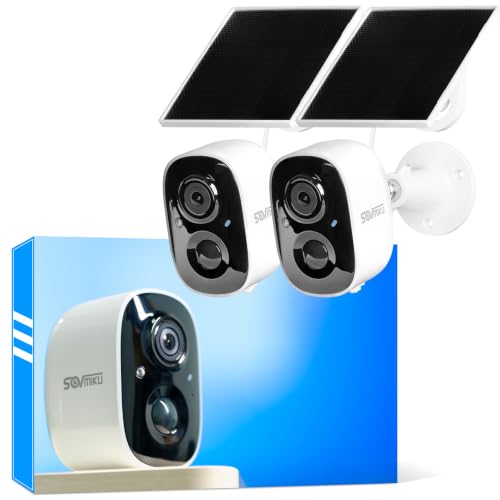
Best for outdoor, no wiring required
Solar-powered with a genuinely easy setup, and honest about its one real limitation: motion clips sit in the cloud for a limited window before they're gone, so it rewards checking the app promptly rather than treating it as permanent storage.
Best for a whole property
This is the one for the segment of buyers who actually need it: an 8-camera, 4K, local-HDD system built for covering an entire property rather than one entry point, with no subscription required since everything records locally. A genuinely different purchase from everything else on this list, and priced accordingly.

Mistakes worth avoiding
- Comparing a single smart camera's price against a multi-channel NVR system as if they're the same purchase.
- Assuming a camera records and stores footage the same way after purchase as it does in the demo video, without checking whether that depends on a subscription.
- Buying based on resolution alone while ignoring night vision, which matters more for most home security use.
- Skipping the false-alert reality check; expect some notification tuning on almost any motion-based camera.
- Pointing an outdoor or doorbell camera across a property line without thinking about it, rather than angling it to your own entry point.
So, which one
Want the doorbell everyone already recognizes and don't mind paying for the full feature set: the mainstream pick above, subscription included. Want the same core job with no ongoing cost: the subscription-free doorbell instead. Watching a room, a pet, or a baby: a local-storage indoor pan/tilt camera over anything cloud-locked. Covering a yard or a spot without easy power access: solar and battery-powered outdoor models exist specifically for this, with the caveat that cloud clip windows vary by brand. And if you're actually covering a full property with multiple entry points: the bigger local-storage system is the right purchase, not several standalone cameras bought separately. Whatever you land on, decide the subscription question on purpose before you buy, not after the first monthly charge shows up.
Top Picks